
At some point mid-summer, the novelty has disappeared, kids want to be entertained, and parents need to get stuff done.
Totally understandable — and not without hope.
Below are four general tips to help children play independently (and buy yourself some productivity) at times when most of the family is home. But we’d love to hear your specific strategies (reach out via Facebook or Instagram)!
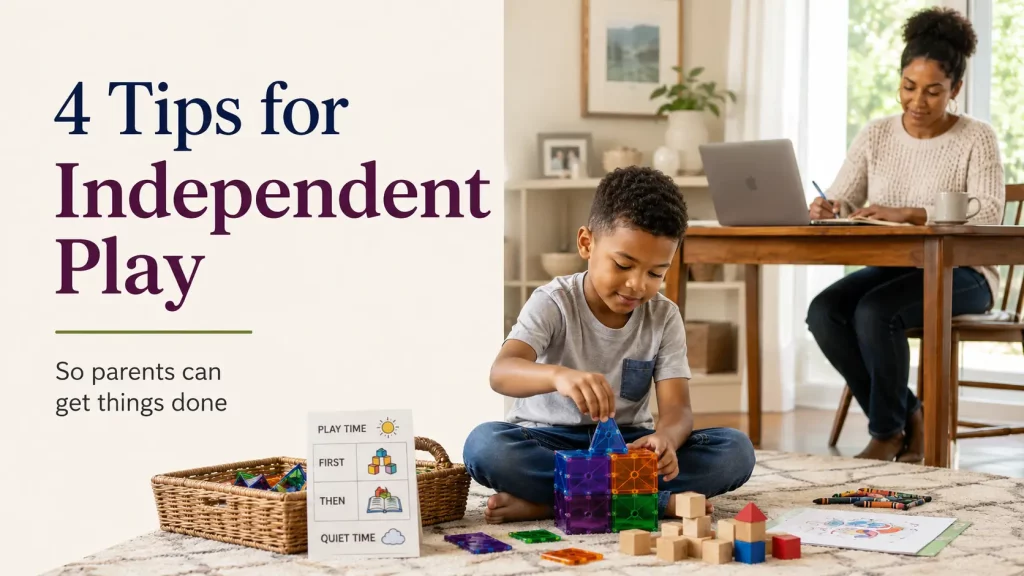
- Start the day with something active (and, if possible, outdoors). Hit up a park, walk the dog, take a bike or scooter ride, do a nature walk. The benefits of activity early in the day are well documented: Improved mental focus, better health, an appetite for more nutritious foods, happier moods, and higher-quality sleep (which yields dividends tomorrow!). Spending time outdoors boasts similar benefits. Getting outside in the morning starts the day off on the right foot and avoids the hottest part of the day — and it enhances your child’s ability to engage in an indoor activity later. It’s good for parents, too!
- Spend a focused 10 minutes with your child (the outdoor time above can count!). Put away your phone and other screens, set a timer, and follow your child’s lead. Even a small amount of focused time has greater impact than hours of distracted time. It improves your relationship, can circumvent attention-seeking behaviors, and helps children feel secure enough to play on their own. Some children benefit from having a scheduled one-on-one time each day.
- Make a mess (strategically). Sometimes kids forget all the cool potential in their existing possessions. Set out some craft supplies, dump LEGOs on your kitchen table, or spread magnetic tiles across your floor. Dig out some toys or books they haven’t touched in a while and set them out in an inviting way. Doing this before your child enters the room can make for a fun surprise and engage them before they realize what’s happening (some kids resist verbal suggestions).
- Work out a routine. We are big fans of routines, which for some children are a necessity. Perhaps your family’s summer routine includes designated times for parents to work while kids play independently, rest times that free up parents, or times in which children help with certain jobs. For some children, it may be helpful to define a beginning and end to independent play time — or even to gradually build up their ability to play independently. Other children play well solo for long periods, so long as their parents are in the room or visible. Figure out what works best for your family!
Pariva Health has helped over 25,000 families and counting — find out more about the special ways in which we empower families of neurodivergent children, offering hope and help, with lots of play and no wait list.