
Cue back-to-school ads, check-ups at the doctor and dentist, haircut appointments, shopping for school supplies — and kids suddenly seem off.
It may show up as general grumpiness, headaches, stomachaches, tears over seemingly minor issues, or repeated questions/complaints.
This back-to-school anxiety comes in varying degrees, and kids may not even understand what’s going on.
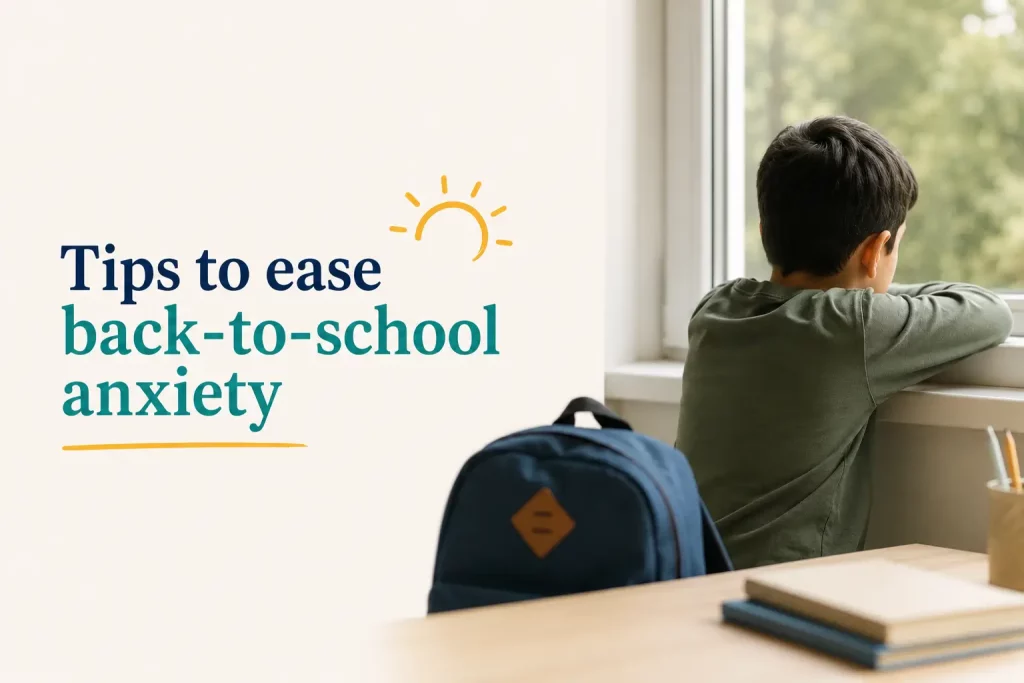
Much of this is normal — change and the unknown cause discomfort even for adults. Questions loom in the backs of kids’ minds: whether they’ll have a mean teacher, whether they’ll have friends in class, whether the work will be too hard, whether they’ll do something embarrassing on the first day. These worries, even if they’re subconscious, can cut to the very core of their significance and value.
On top of that, the long days at school usually represent a big shift after a more flexible summer routine.
Typically, back-to-school anxiety increases near the start of school, tapering off within a week or two as children settle in. If anxiety worsens instead, please consult your child’s doctor or a Pariva clinician.
Here are practical tips to talk through back-to-school anxiety with your child: (We also have practical tips for helping children navigate big school transitions, as well as suggestions for readjusting to a school routine.)
- “It makes sense that you feel that way.” Rather than dismissing a feeling, calmly acknowledge it. It helps children to know that back-to-school anxiety is normal. Using a straightforward tone reinforces that message, because children look to their parents to calibrate how worried they should be. Note: Maintain a distinction between the feeling and the reality to avoid magnifying the fear. You can acknowledge that something feels scary without saying that it is scary.
- “How do you think you would handle that?” Help a child pinpoint the specific thing that worries him the most, then ask how he would handle that thing if it did happen. Moving into problem-solving mode reminds a child that he is capable and helps him avoid an anxiety spiral. It also avoids dismissing the feeling with a blanket statement that everything will be fine, and it demonstrates your belief in his capacity to solve a problem (rather than you solving it for him).
- “I’ve felt that way, too!” Sharing a story that relates from your past reinforces the message that anxiety about the unknown is normal and that it can be overcome.
- Keep up the matter-of-fact manner when you visit the school, meet the teacher, do dropoff and pickup, etc. Your calm, reassuring, supportive demeanor communicates loads to your child. (Avoid being overly emotional or protective.) In some cases, consider scheduling an early visit to the school to figure out class locations, etc.
- “Do the next right thing.” Take a cue from “Frozen 2” — encourage an overwhelmed child to just do the next right thing, rather than needing all the answers right away. This phrase brings simplicity and focus, building resilience and improving decision-making.
- Talk through/practice the school routine. Knowing what to expect in one area can calm broader anxiety. Also, easing back into the routine several weeks before school starts makes for one less change when the school year begins.
- “What friends have you missed seeing this summer?” Use these types of questions to bring to mind some of the things your child liked about school, without mentioning school outright. A play date with one of those friends could reinforce the message.
Pariva Health has helped over 25,000 families and counting — find out more about the special ways in which we empower families of neurodivergent children, offering hope and help, with lots of play and no wait list.