
Think about play.
What comes to mind? Perhaps a child building blocks, climbing a tree, or chasing friends? Whatever popped into your head, that reflects your definition of play — one you may not even have realized you had.
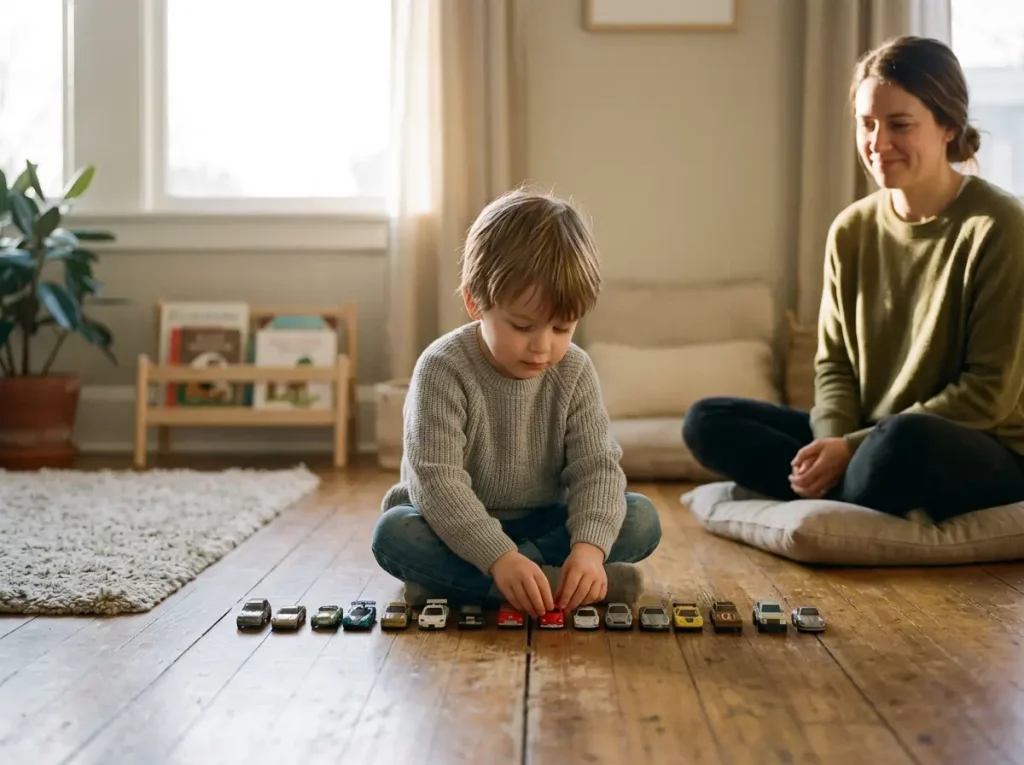
When a child, particularly one with some form of neurodivergence, doesn’t fit that image, it’s natural for parents and teachers to feel unsure or concerned.
But before taking any action, pause and observe without interrupting. Rather than wondering why a child doesn’t play like others, try asking, “What is my child getting from this play?” You may notice:
- Repetition that helps the child feel calm or organized
- Sensory play that supports regulation
- Deep focus that builds attention and problem-solving
- Non-verbal exploration that replaces spoken communication
This play is doing important work, even if it looks different from your expectations!
Then, consider participating. One of the most powerful things adults can do is join the child’s play — instead of trying to change it. Doing so communicates acceptance and value. But what does that look like?
Here are a few gentle ways to enter a child’s play world:
- Respect their pace. They may not acknowledge your presence right away, and that’s OK.
- Use minimal language. You don’t need constant instructions or questions. Try simple observations such as: “You’re lining them up,” or “That’s spinning quickly.”
- Follow their lead. Sit nearby and notice what they’re doing. Let them decide what happens next.
- Imitate before you initiate. If they’re stacking blocks, stack alongside them. If they’re spinning a wheel, spin another one. Imitation builds connection without pressure.
- Shift the goal of play. For children, play isn’t always social or imaginative. Sometimes it’s about feeling safe in their body, reducing sensory overload, understanding how things work, or enjoying predictability.
Play is powerful stuff! We wish you joy and connection. Pariva Health has helped over 25,000 families and counting — find out more about the special ways in which we empower families of neurodivergent children, offering hope and help, with lots of play and no wait list.